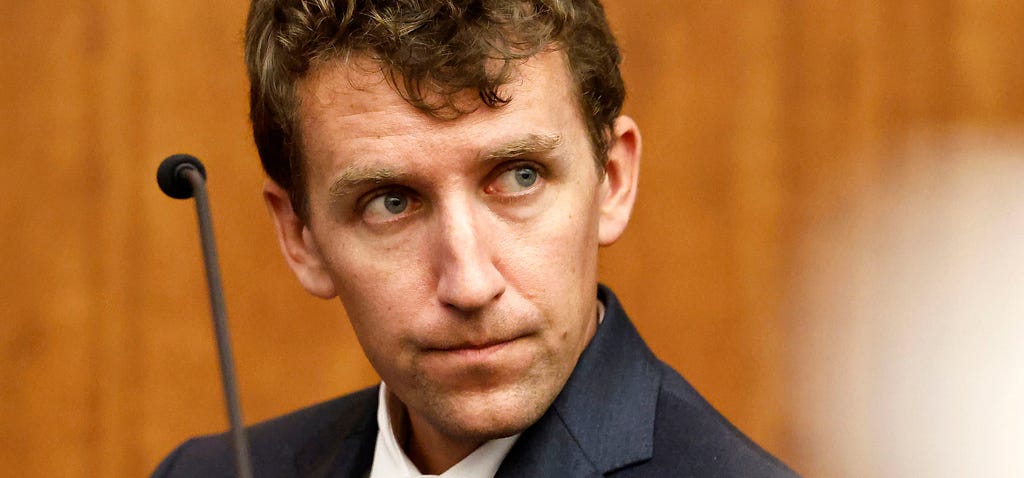
On the morning of April 15, 2024, Patrick Clancy ran the Boston Marathon. His 5-year-old daughter’s hair bow was pinned to his jersey. On one wrist he wore his 3-year-old son’s wristband, and on the other, a bracelet that had belonged to his 8-month-old baby. Written on his back: “In memory of Cora, Dawson & Callan. Every mile, every day.” He finished in just under four hours and raised more than $75,000 for Boston Children’s Hospital, where 15 months earlier his youngest son had been declared brain-dead and removed from life support, just days after the deaths of both his other children.
Here was a man who had lost everything, and wasn’t hiding it. At the time, strangers cheered his name along the course. But two years later, the internet, which spent this summer obsessively watching the trial for his children’s murders, dug up the footage and turned against him. Patrick Clancy was coping too well. This isn’t how someone who’s grieving should act. He should be too busy crying to train for a marathon. He must have done it.
Seeing this gave Amanda Knox flashbacks to the relentless scrutiny of her own behavior in the wake of her roommate’s murder in Perugia, Italy, in 2007, for which she was falsely imprisoned. There is no one “right” way to react to trauma, or to grieve, but when the lens of suspicion falls on you, everything is wrong. When she cried, they were crocodile tears; when she didn’t, she was cold and unfeeling. When she smiled at her family in the courtroom—a brief glimpse to let them know she was okay—she was a whore for the cameras.
This is an excerpt of the original article published by The Free Press. Read the full article there.